
The Tanpuras of Miraj
In the narrow lanes of Miraj, Maharashtra, where the scent of turmeric mingles with the rich grain of polished wood, a centuries-old craft thrives— the making of the tanpura. This unassuming town has long been the heart of India’s finest sitars and tanpuras, handcrafted by artisans whose family names bear the weight of tradition itself—Sitarmaker.
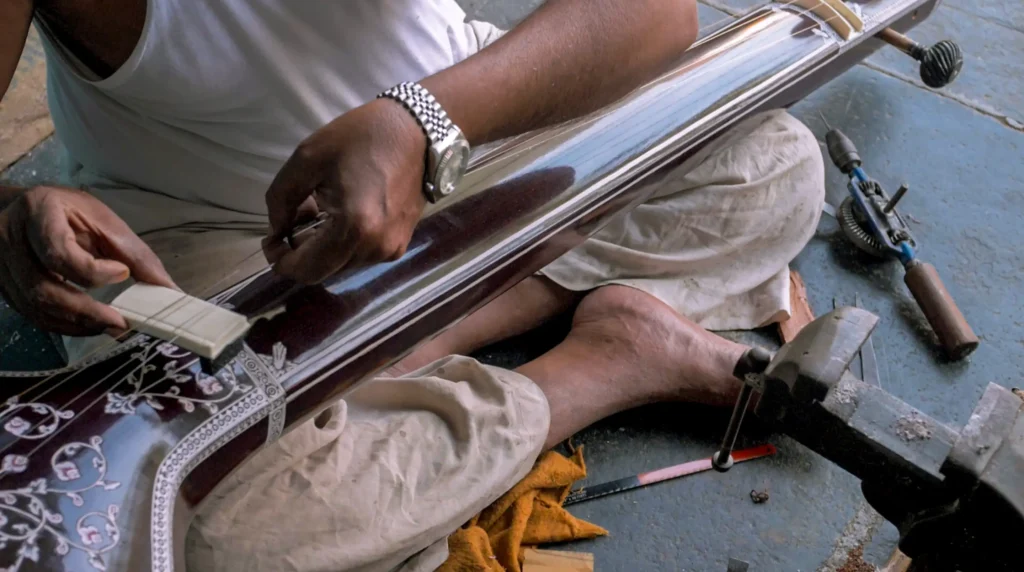
The history of instrument-making in Miraj dates back to the 1850s, when Faridsaheb Shikalgar, under the patronage of the Patwardhan rulers, repaired a visiting musician’s sitar. This single act set the stage for a lineage of master craftsmen whose creations would accompany some of Hindustani classical music’s greatest voices, from Bhimsen Joshi to Gangubai Hangal.
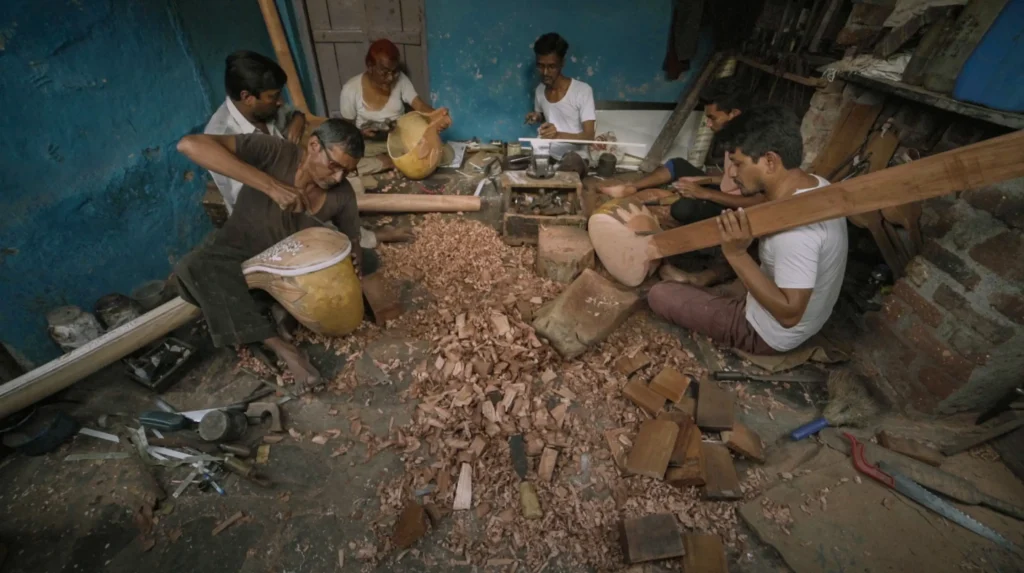
The tanpura is born from the soil—its resonating chamber carved from specially cultivated gourds in Pandharpur. Each gourd is handpicked, sun-dried, and meticulously shaped, before being paired with a neck of tun or red cedar wood. The tension of its strings, the precision of its bridge (tar-jiwari), and the subtleties of its polish all determine its signature drone—the sound that anchors Indian classical music.
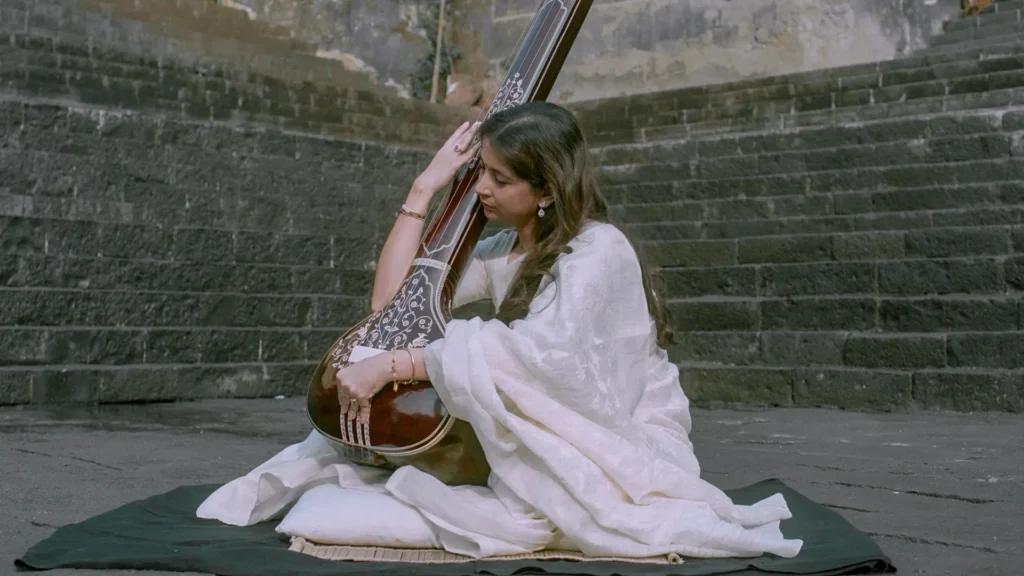
With the rise of electronic tanpuras, this exquisite art faces an uncertain future. The labor-intensive nature of handcrafting, combined with a shrinking market, threatens the survival of these artisans. Yet, in workshops that double as homes, generations continue to carve, string, and tune, ensuring that the soulful hum of the tanpura does not fade into silence.
In a world of instant sound, Miraj still sings—one handcrafted tanpura at a time.