For seven generations, the Khatri family of Barmer has carried forward the tradition of Ajrakh, an intricate form of block printing rooted in the cultural histories of Sindh and Rajasthan. Each piece of cloth is the result of a painstaking process of washing, dyeing and printing, with wooden blocks carefully aligned to create precise geometric patterns. Using natural dyes such as indigo and madder, the artisans transform plain fabric into textiles rich in colour, symmetry and detail. Every stage demands patience and precision, with knowledge passed down through generations, from one pair of hands to the next.
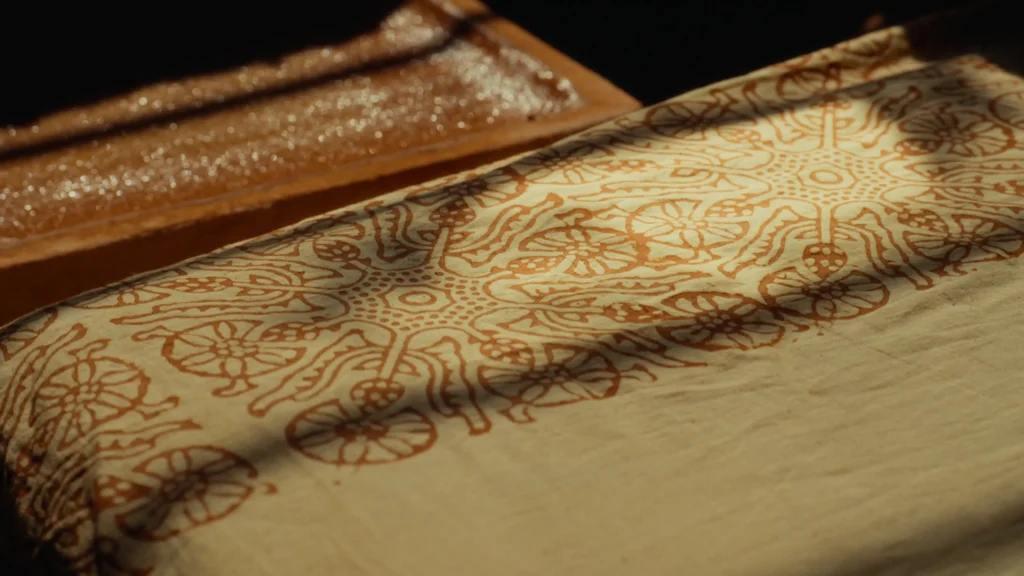
Through migration and changing times, Ajrakh has remained a source of livelihood, identity and continuity. Yet, as traditional markets shrink and industrial production grows, the craft faces an uncertain future. What was once practised by dozens of Khatri families in Barmer now survives in only a handful, each carrying the responsibility of keeping this knowledge alive
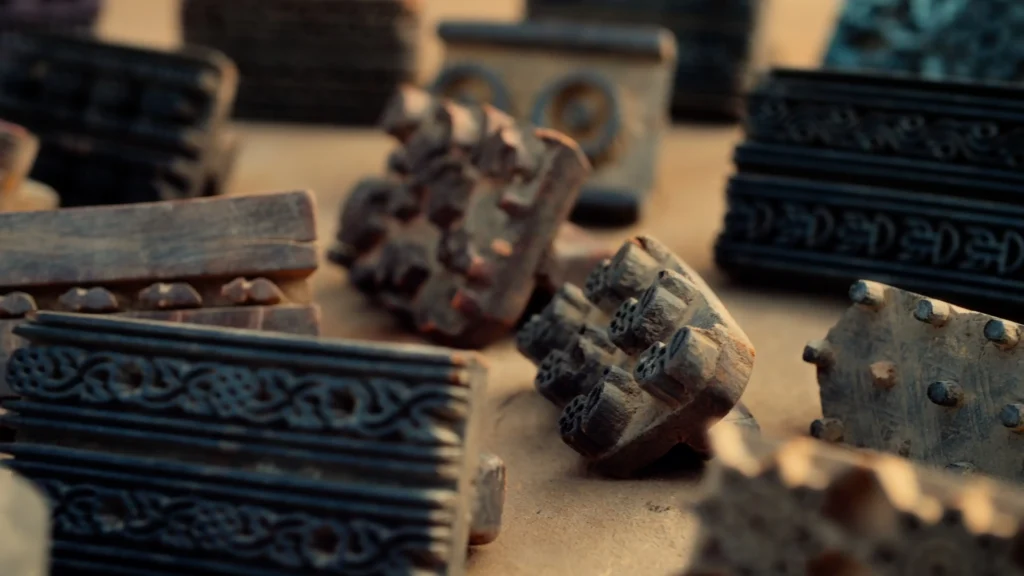
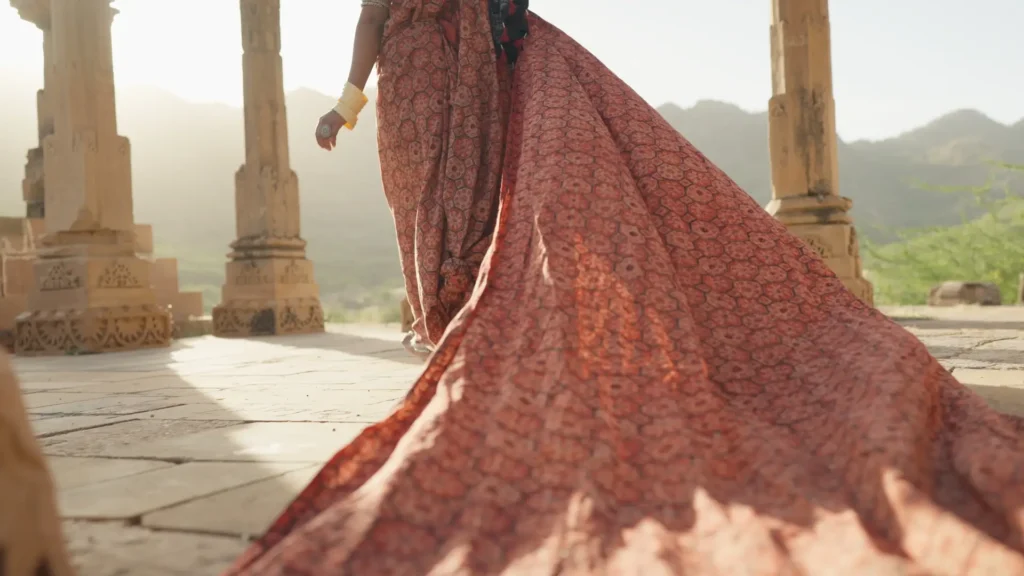
The film follows the Khatri family through the rhythms of their work, capturing wooden blocks striking cloth, hands immersed in dye and intricate patterns slowly emerging through repeated layers of colour. Against the vast landscape of the Thar Desert, shifting sands and footprints tracing the dunes offer a visual counterpoint to the precision of the printed fabric. A local legend of Ajraki, a celestial weaver, finds a subtle echo in these images, drawing a poetic connection between the patterns on the cloth and the natural world.
At its heart, this is a story of inheritance and resilience, of a family that has carried its craft across borders and through generations of change. In the hands of the Khatris, Ajrakh becomes more than a textile; it is a living record of migration, memory and belonging. As the world around it changes, its future rests with the artisans who continue to practise, adapt and pass it on.