
Anādiḥ Anantaḥ Without Beginning. Without End.
There is a village in Karnataka where time moves differently. On the quiet banks of the Tunga River in Shivamogga district lies Mattur, a place where the past does not linger as nostalgia but breathes as a living, daily reality. Here, Sanskrit is not a subject studied in a classroom, nor a language preserved behind museum glass. It is spoken over morning tea. Exchanged between neighbours. Passed from grandparent to grandchild in the ordinary rhythms of an ordinary day.
This is what Anādiḥ Anantaḥ, without beginning, without end, means when set against the story of Mattur. The name is not poetry for its own sake, it is observation.
Life in Mattur turns on traditions that are tended across generations with extraordinary care. Alongside Sanskrit, many residents speak Sankethi, a dialect rooted in Tamil with deep Sanskrit influence, shaped over centuries by contact with Kannada and Telugu, a linguistic fingerprint unique to this community. At the heart of its cultural life is the Guru–Shishya tradition, the ancient teacher–student lineage that shapes the way knowledge moves between people quietly, personally, deliberately. In Mattur and its surrounding villages, this tradition is unbroken. It is not a revival. It is a continuation.
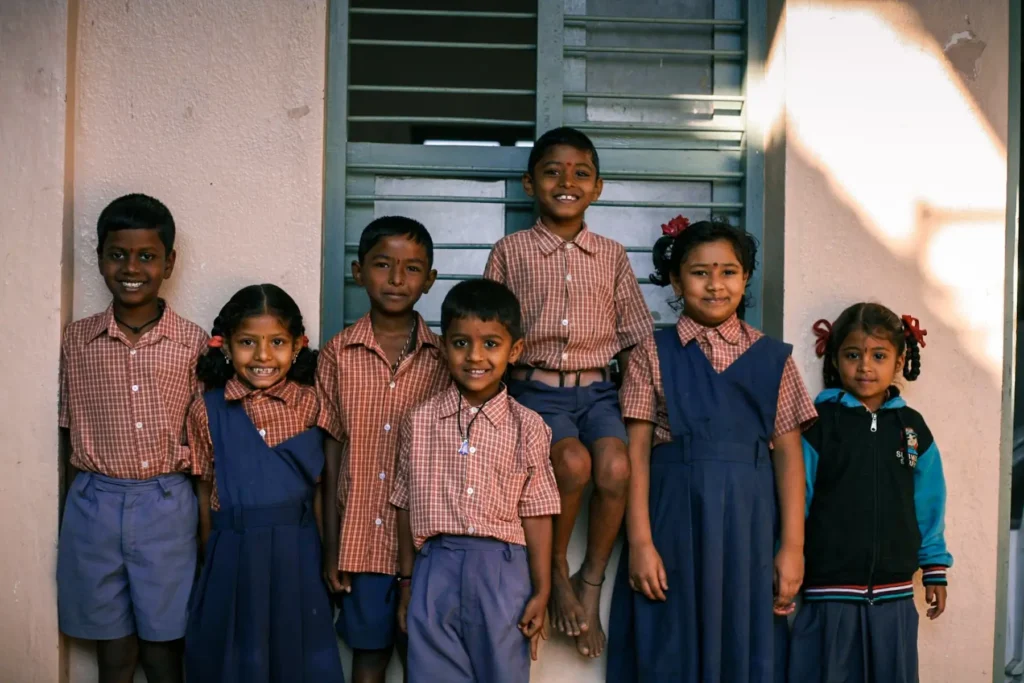
In nearby Hosahalli, Vedic Pathshalas carry the weight of this inheritance. Students here do not simply study; they dedicate years of their lives to the Rigveda, the Yajurveda, Sanskrit grammar, and the philosophical rigour of Mimamsa. Many begin in the first grade.Complete mastery of the Rigveda in its recitational forms can take over a decade.
It would be easy to romanticise Mattur. But its story is also one of quiet resilience. In most parts of India, Sanskrit has quietly receded from daily life, a gradual drift rather than a single rupture. In Mattur, the community simply chose otherwise, not through spectacle or protest, but through the patient, private act of continuation.
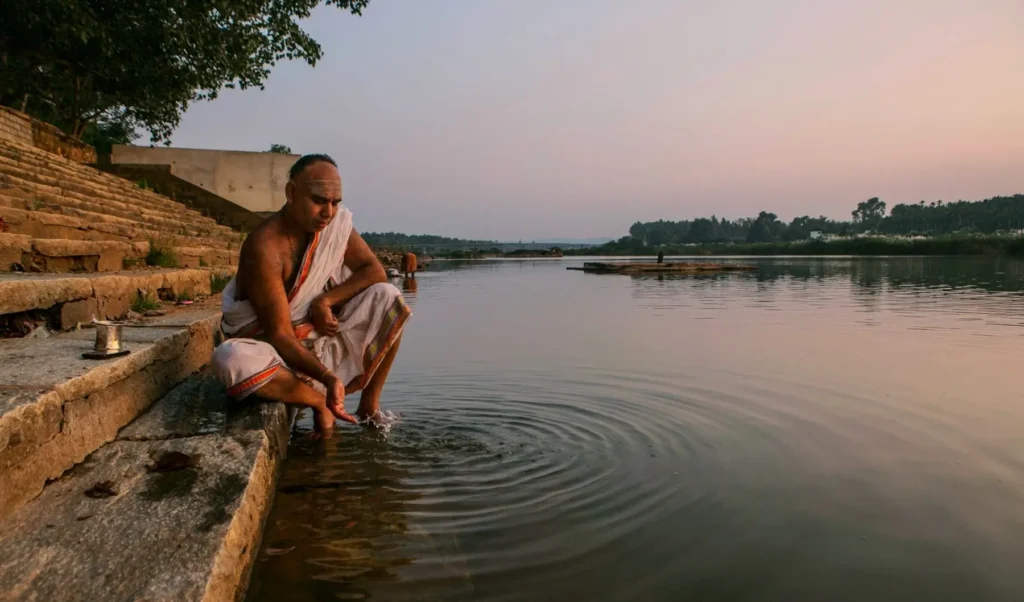
Vedic lessons here remain sacred, offered on the community's own terms. Visitors are welcomed with warmth, but also with boundaries, a reminder that what is preserved here belongs first to the people who preserve it.
Spending time in Mattur reveals something that resists an easy summary. Over several days, in conversations with villagers, in visits to local Pathshalas, in small moments of shared hospitality, a larger truth comes into focus: this is not a place frozen in the past. It is a place where the past remains useful. Where ancient knowledge and cultural memory are not relics to be displayed but living tools, carried forward by people who understand what is lost when they are not.
Anādiḥ Anantaḥ. Without beginning. Without an end. In Mattur, a language and everything it holds simply continues.